
H2CAP Plus: Best Hydrogen
Water Bottle
The World's Lightest SPE/PEM Hydrogen Generator
The highest-performing portable hydrogen generator across 20+ markets. Designed for wholesale distribution — proven globally, backed by science.
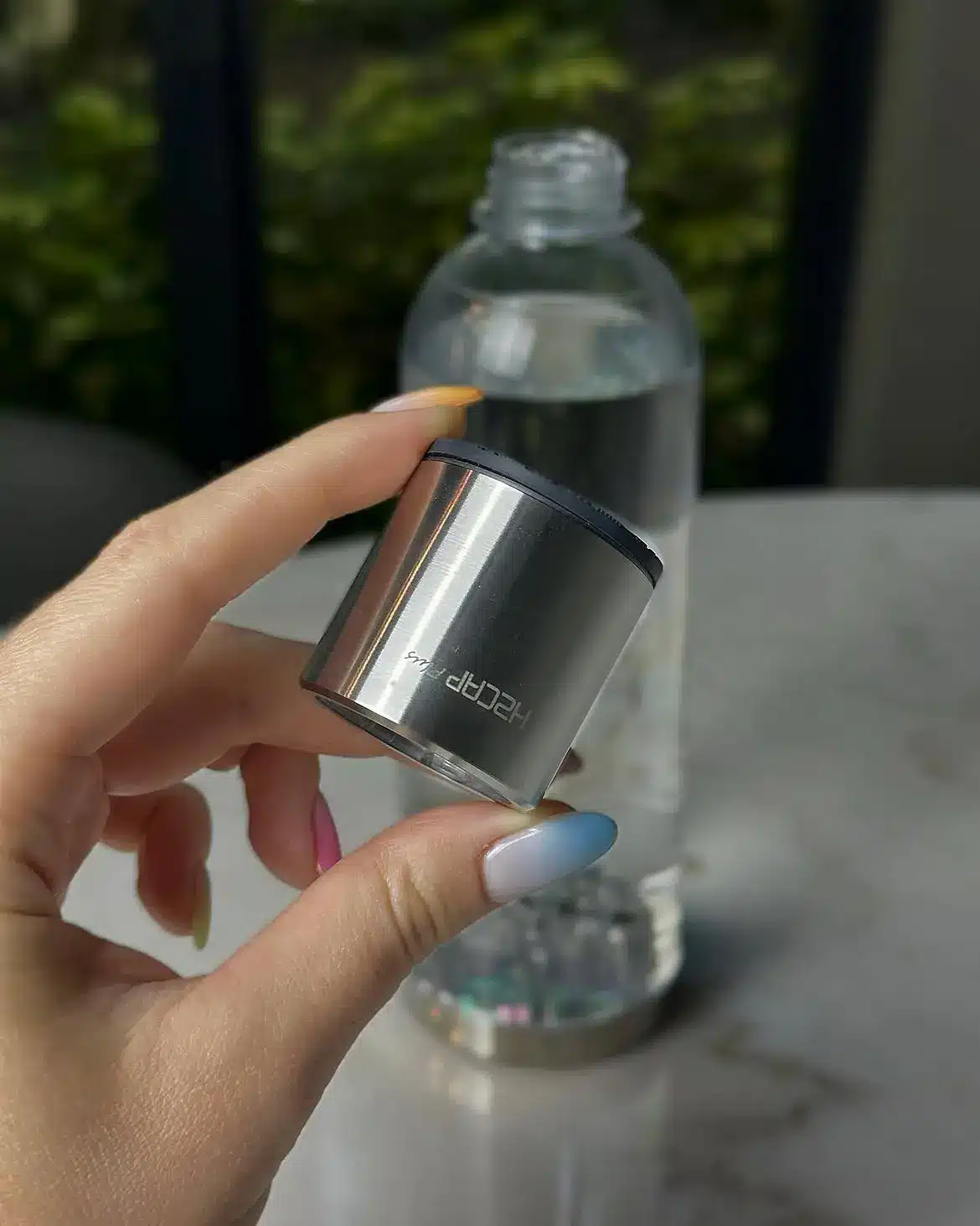
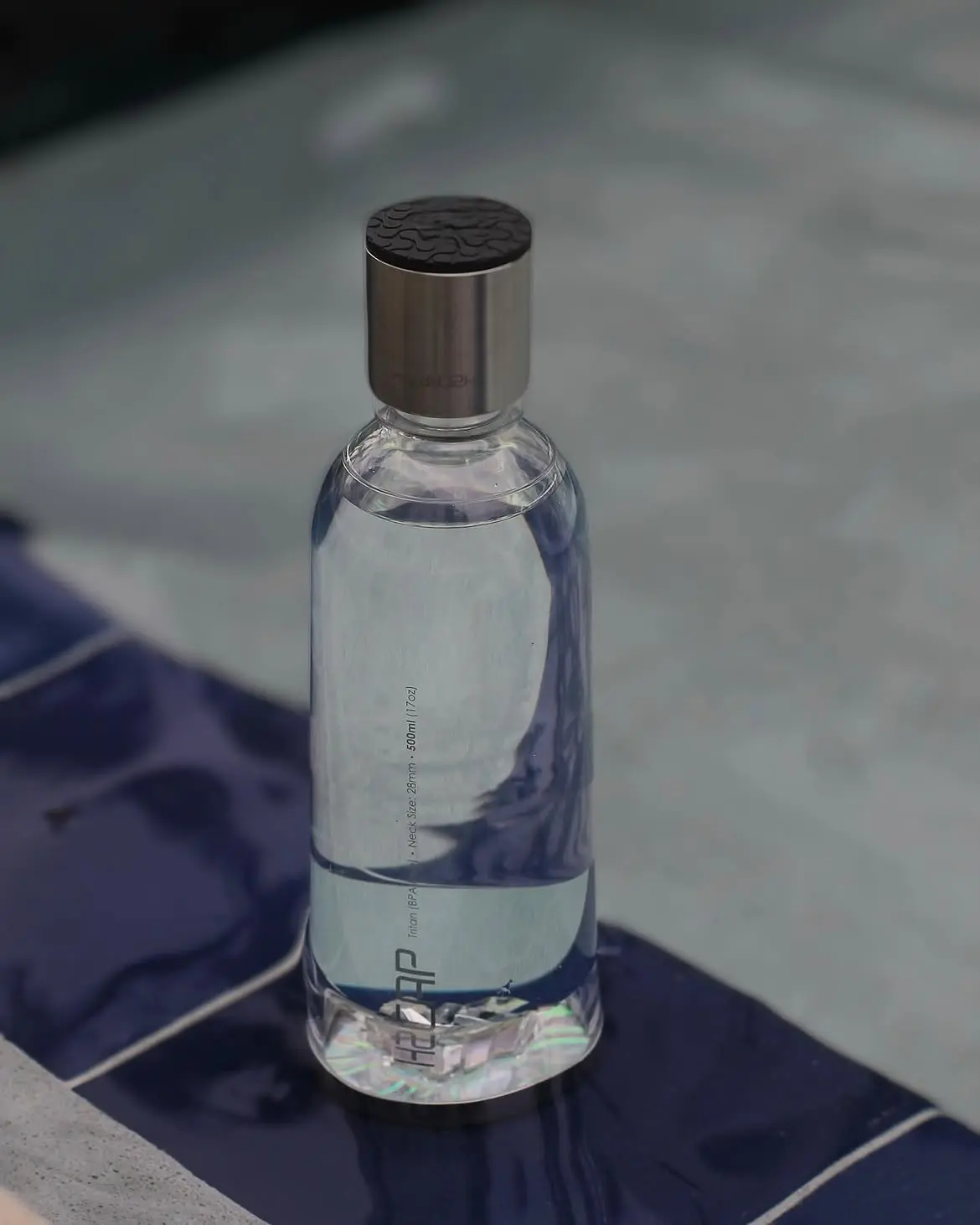


H2CAP Plus — Upgrade Your Water
Lightest.
Smallest.
Smartest.
Lightest — 120 g
At only 120 g, H2CAP Plus is one of the lightest hydrogen generators available. Compact yet powerful — it travels effortlessly from gym sessions to business trips.
Smallest — Universal 30 mm Fit
Designed to fit standard 30 mm bottles. Converts 500 ml of water into up to 1,500 ppb hydrogen-rich water in just 3 minutes 30 seconds.
Smartest — Auto-Stop Sensor
Built-in smart sensor monitors hydrogen production and automatically stops when the cycle is complete. Powered by USB-C for modern convenience. No battery to replace.
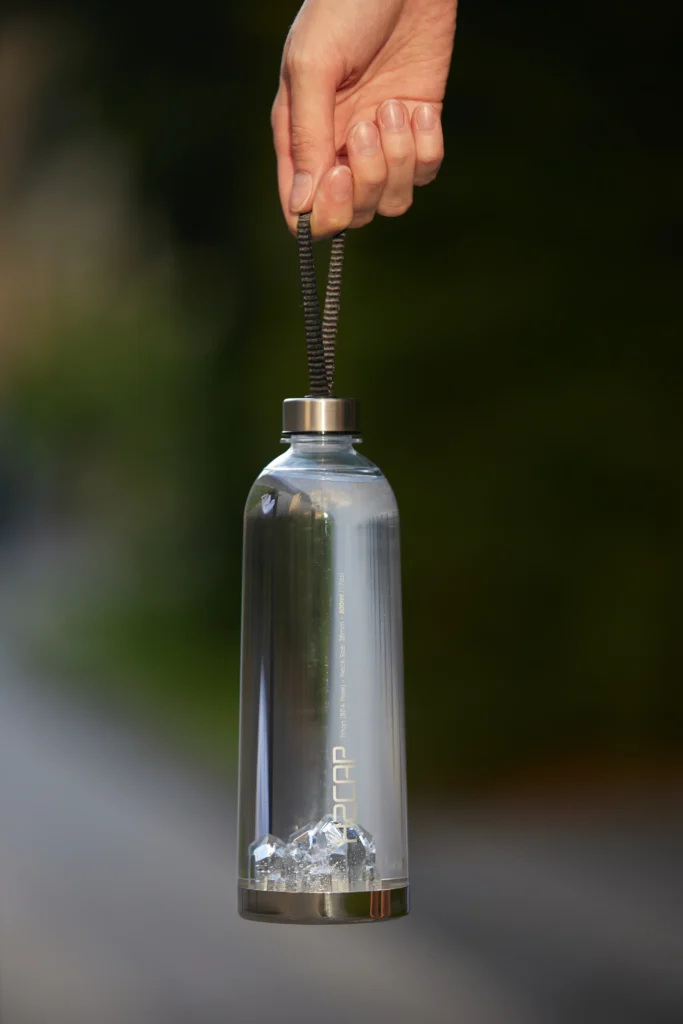
Hydrogen Water 101
What Is a Hydrogen Water Bottle?
A hydrogen water bottle is a portable device that dissolves molecular hydrogen gas (H₂) into drinking water through electrolysis. The result is hydrogen-rich water — ordinary water that contains elevated concentrations of dissolved H₂ measured in parts per billion (ppb).
This is fundamentally different from alkaline water. Alkaline water has a higher pH (typically 8–9.5) but does not necessarily contain dissolved molecular hydrogen. Hydrogen water, by contrast, is defined by its dissolved H₂ concentration, not its pH. Learn more: What is Hydrogen Water? →
Because H₂ is the smallest molecule in existence, it diffuses rapidly through water, cell membranes, and biological barriers — a property that distinguishes it from larger antioxidant molecules.
Browse 749 Peer-Reviewed StudiesSimple 4-Step Operation
How to Use the H2CAP Hydrogen Water Bottle
H2CAP works as a cap on your own bottle — no proprietary container required. Four steps take you from a plain bottle of water to 1,500 ppb hydrogen-rich water.
-
Fill & Attach Fill the bottle up to the marked line, attach H2CAP, and turn it upside down. Any standard 30 mm-neck bottle fits — no proprietary container needed.
-
Connect USB Connect the USB-C cable to H2CAP and plug it into a power source. There is no internal battery to charge or replace.
-
Auto Operation The device starts automatically and stops when the cycle is complete. A built-in sensor monitors hydrogen production — 500 ml reaches up to 1,500 ppb in 3 min 30 sec.
-
Detach & Drink Detach H2CAP and enjoy your hydrogen water. Drink soon after generation — H₂ is a gas and escapes from an open bottle within 15–30 minutes.
Storage tip: H2CAP has a hydrophilic PEM membrane. If you will not use it for a few days, put a little water inside and keep the cap closed while storing it. Avoid hot water above ~40°C and carbonated water — both damage or interfere with the membrane.
How It Works
The Electrolysis Process
All hydrogen water generators split water molecules (H₂O) into hydrogen (H₂) and oxygen (O₂) using an electric current. The critical difference between a basic electrolysis device and H₂CAP Plus lies in the membrane Technology used.
Basic Electrolysis
SPE / PEM — H₂CAP Plus
| Feature | Basic Electrolysis | SPE/PEM (H₂CAP Plus) |
|---|---|---|
| H₂/O₂ separation | Mixed in water | Fully separated |
| Ozone / chlorine byproducts | Possible | None |
| H₂ concentration achievable | 300–600 ppb | Up to 1,500 ppb |
| Electrode material | Stainless steel / titanium | Platinum-coated titanium |
| Water pH change | Unpredictable | Minimal (hydrogen-selective) |
In the H₂CAP Plus, the PEM membrane acts as a selective barrier: hydrogen is infused into your drinking water, while oxygen and any trace byproducts are vented separately. The result is pure, high-concentration hydrogen water with no unwanted gases dissolved into what you drink.
Why platinum-coated electrodes? Platinum is chemically inert, highly efficient as a catalyst for hydrogen production, and does not leach metals into water. It is the same material used in scientific and medical hydrogen research equipment.
Technical Specification
H2CAP Technical Specification
H2CAP has a hydrophilic PEM. If you will not use it for a few days, put a little water inside and keep the cap closed while storing it.
The H2CAP Plus featured on this page is engineered and manufactured by our own factory in Korea. The complete engineering documentation lives on the manufacturer site: the H2CAP Plus hydrogen water bottle product hub, the full technical specifications, the original certification documents (CE, RoHS, KC), and the dissolved hydrogen concentration test you can repeat yourself.
We publish the evidence there — including its limits — so wholesale buyers can verify every number before ordering.
Buyer's Guide
How to Choose the Best Hydrogen Water Bottle
Choosing the best hydrogen water bottle goes beyond portability. Focus on these key factors: hydrogen concentration (ppb), electrolysis Technology , safety, and durability. Use these benchmarks before comparing any brand.
H₂ Concentration (ppb) — Most Important
Most positive research outcomes use 1,000–1,600 ppb. Devices below 500 ppb may not match published protocols. Always verify with a reagent test kit.
SPE / PEM Technology
Only SPE/PEM devices fully separate H₂ from O₂ and eliminate ozone/chlorine byproducts. Basic electrolysis cannot achieve this separation.
Materials Safety
Require BPA-free, food-grade materials. Confirm the electrode is platinum-coated titanium — not stainless steel, which can leach trace metals.
Power System & Longevity
Devices with internal Li-ion batteries degrade within 12–18 months as capacity fades. USB-C powered devices (no internal battery) outlast them significantly.
Product Comparison
H₂CAP Plus vs. Competing Brands
The hydrogen water bottle market ranges from inexpensive magnesium-tablet bottles to high-end SPE/PEM generators. Below is a direct comparison of the most widely distributed devices as of 2026.
| Feature | H₂CAP Plus ★★★★★ | Lourdes HWP | Echo Flask | Aquacure Portable | Generic Amazon <$50 |
|---|---|---|---|---|---|
| H₂ Concentration | Up to 1,500 ppb | ~1,200 ppb | 0 see note below | ~800–1,000 ppb | 200–500 ppb |
| Technology | SPE / PEM Platinum electrode | SPE / PEM | SPE / PEM | SPE / PEM | Basic electrolysis |
| Generation Time | 3 min 30 sec Fastest · 500 ml | ~5 min · 230 ml | ~20 min · 355 ml | ~10 min · 500 ml | 5–10 min · 300 ml |
| Weight | 120 g Lightest | ~270 g | N/A | ~380 g | 350–500 g |
| Internal Battery | USB-C Powered No battery to replace | Built-in Li-ion | Built-in Li-ion | Built-in Li-ion | Built-in Li-ion |
| Bottle Compatibility | Any 30 mm-neck bottle Universal fit | Fixed proprietary | Fixed proprietary | Fixed proprietary | Fixed 300–350 ml |
| Ozone-Free | ✓ Yes | ✓ Yes | ✓ Yes | ✓ Yes | ⚠ Not guaranteed |
| BPA-Free / Food Grade | ✓ Yes | ✓ Yes | ✓ Yes | ✓ Yes | ⚠ Variable |
| Wholesale / B2B | ✓ Yes 20+ countries | Limited | Limited | ✕ No | ✕ No |
| Retail Price Range | Contact for pricing | N/A | $299.99 | N/A | $25–50 |
H₂CAP Plus ★★★★★
Lourdes HWP
Echo Flask
Aquacure Portable
Generic (Amazon <$50)
Misleading Advertising Alert: Echo Flask H₂ Concentration Claim
Echo Flask claims up to 8,000 ppb (8.0 ppm) of dissolved hydrogen — a figure that is physically impossible under normal atmospheric conditions.
According to Henry's Law, the maximum solubility of molecular hydrogen (H₂) in water at standard temperature and pressure (25°C, 1 atm) is approximately 1.57 mg/L (~1,600 ppb / 1.6 ppm). Any claim exceeding this limit in an open-bottle, atmospheric-pressure environment has no scientific basis. The H₂ concentration shown as "0" reflects the effective dissolved hydrogen a consumer actually drinks after the bottle is opened at atmospheric pressure.
Notably, Echo Water's own blog acknowledges this physical limit, stating: "Under normal atmospheric pressure and room temperature, the maximum achievable concentration is around 1.6 ppm" — directly contradicting their product's 8.0 ppm marketing claim.
↗ Molecular Hydrogen Institute — H₂ Solubility & Henry's Law
Testing note: H₂ concentration figures are measured using a dissolved hydrogen meter (reagent drop method / colorimetric test) at ambient temperature (20–25°C) with purified water. Results may vary slightly with tap water mineral content, water temperature, and altitude.
Peer-Reviewed Research
Science-Backed Benefits of Hydrogen Water
Selective Antioxidant Activity
Unlike vitamin C or other antioxidants that react broadly with reactive oxygen species (ROS), molecular hydrogen appears to selectively neutralize the most damaging radical: the hydroxyl radical (•OH), responsible for oxidative damage to DNA, proteins, and cell membranes.
Importantly, H₂ may leave beneficial ROS — which serve normal cell-signaling roles — largely intact. This selectivity is a key differentiator from broad-spectrum antioxidants.
↗ Health Benefits of Electrolyzed Hydrogen Water (PMC, 2024)Exercise Recovery Support
Physical exercise increases ROS production, contributing to muscle fatigue and delayed recovery. A 2024 meta-analysis of randomized controlled trials found hydrogen supplementation was associated with improved antioxidant markers and reduced oxidative stress indicators in exercising subjects.
↗ Meta-analysis: H₂ & antioxidant capacity in exercise (PMC, 2024)Cellular Diffusion Advantage
H₂ is the smallest molecule in existence, giving it a unique diffusion capability. Research indicates molecular hydrogen can penetrate cell membranes, enter mitochondria, and cross the blood-brain barrier — anatomical barriers that block most therapeutic molecules.
This broad distribution is a key reason why hydrogen research spans so many biological systems across different disease models.
↗ Hydrogen diffusion and cellular penetration (PMC, 2022)Inflammation Modulation
Oxidative stress and chronic inflammation are closely linked: elevated ROS can activate inflammatory pathways, which in turn generate more ROS. Several studies have explored hydrogen's role in interrupting this cycle by reducing the oxidative triggers that initiate inflammatory signaling.
↗ Anti-Inflammatory Effects of Electrolyzed Hydrogen Water (PMC, 2024)Metabolic Health — Emerging Research
Preliminary research suggests hydrogen water may support glucose metabolism and lipid profiles. A 2023 randomized trial noted favorable changes in metabolic markers in participants who consumed hydrogen-rich water over 8 weeks. This is an active and evolving area of study with promising but not yet conclusive evidence.
The concentration question: Most positive research outcomes involve hydrogen water at 1,000–1,600 ppb. Devices producing less than 500 ppb may not deliver concentrations consistent with research protocols. H2CAP Plus consistently produces 1,200–1,500 ppb — within the studied range.
Order a Sample Before You Commit
Test one unit before your wholesale order.
Order a single H2CAP Plus directly from BioNatural Co. to evaluate it firsthand before placing a bulk order. See the build quality, verify the hydrogen output, and inspect the retail packaging for yourself.
- Assess build quality & finish in person
- Verify real-world hydrogen concentration
- Review retail-ready packaging & manuals
Ready for volume? Request wholesale pricing →
B2B & Wholesale
For Distributors & Wholesale Buyers
H₂CAP Plus has been successfully distributed through health product retailers, wellness clinics, and functional water distributors in 20+ countries across North America, Europe, and Asia-Pacific.
Years of Functional Water Export
Our company has been exporting alkaline water ionizers, hydrogen water generators, and functional water products for over 30 years. We understand the education required to successfully sell hydrogen water in Western markets — and we support our distribution partners with that knowledge.
Frequently Asked Questions
Questions About the Best Hydrogen Water Bottle
Everything you need to know about hydrogen water, H2CAP Plus, and how to get started — answered clearly.
Hydrogen Water Basics
What is hydrogen water?
How long does hydrogen stay in water after generation?
How many times per day should I drink hydrogen water?
Is 1,500 ppb a therapeutically relevant concentration?
Is hydrogen water safe?
Using H2CAP Plus
Can I use H2CAP Plus with tap water?
Can I use H2CAP Plus with hot or carbonated water?
How do I know if H2CAP Plus is working correctly?
How do I maintain H2CAP Plus?
What is the expected Lifespan of H2CAP Plus?
Comparisons & Purchasing
What's the difference between H2CAP Plus and an alkaline water ionizer?
Can I order H2CAP Plus for wholesale or distribution?
Have a question not answered here?
Contact Our Team →Scientific References
References
- 1Ohsawa I, et al. (2007). Hydrogen acts as a therapeutic antioxidant by selectively reducing cytotoxic oxygen radicals. Nature Medicine, 13(6), 688–694. ↗ nature.com/articles/nm1577 — The landmark study that launched modern hydrogen water research.
- 2Ohsawa et al. (2007) — same landmark study, cited for the brain ischemia rat model context.
- 3Martínez-Burgos MA, et al. (2024). Health Benefits of Electrolyzed Hydrogen Water: Antioxidant and Anti-Inflammatory Effects in Living Organisms. PMC. ↗ PMC10967432
- 4Korovljev D, et al. (2024). Can molecular hydrogen supplementation reduce exercise-induced oxidative stress in healthy adults? A systematic review and meta-analysis. PMC. ↗ PMC10999621
- 5Hydrogen diffusion and cellular penetration research (2022). Hydrogen, a Novel Therapeutic Molecule, Regulates Oxidative Stress, Inflammation, and Apoptosis. PMC. ↗ PMC8721893
Related Reading
Continue Exploring
What Is Hydrogen Water?
Science-based guide to molecular hydrogen, how it works, and what the research says.
Read → ⚖️Hydrogen vs. Alkaline Water
Key differences between H₂ water and alkaline ionized water — which is right for you?
Read → 🏠Home Hydrogen Water System
Countertop hydrogen module for whole-family daily use — no bottles required.
Read → 🔬Molecular Hydrogen & Health
Deep dive into the science: 1,700+ studies, research areas, and key findings.
Read → ⚡Alpha 1700 Water Ionizer
Full countertop ionizer producing both alkaline and hydrogen-rich water for home use.
Read → 📋All Products Overview
Full lineup: water ionizers, hydrogen bottles, filtration systems, and wellness products.
Read → 🤝Become a Partner
Join our distribution network in 20+ countries. Apply for wholesale access today.
Read → 📩Send an Inquiry
Request wholesale pricing, regulatory docs, or product samples for your market.
Read →