
How Much Hydrogen Water Per Day? Proven Daily Dosage Guide
A science-based answer drawn from clinical trials — covering H₂ concentration, daily volume, timing, and which devices actually deliver a therapeutic dose.
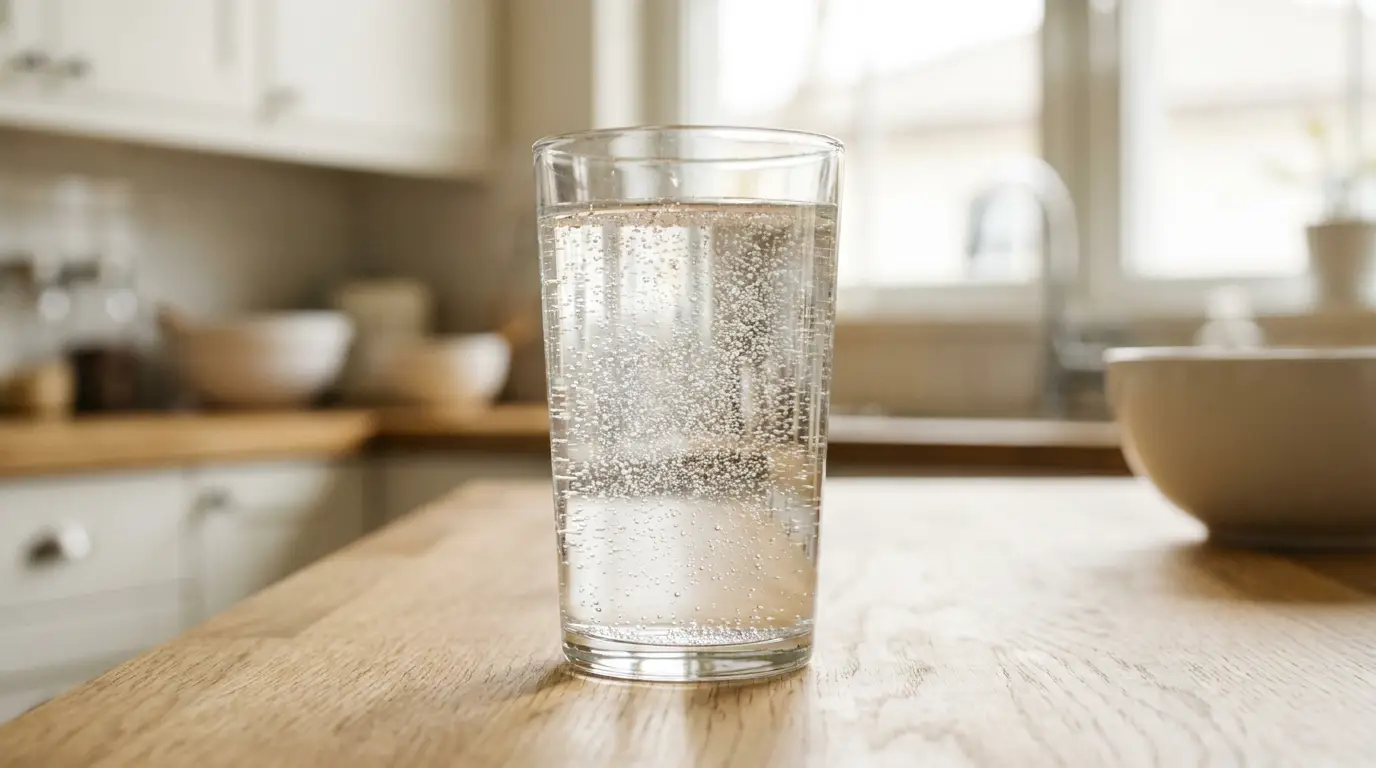
- Most clinical trials use 1.5–2.0 litres per day at 1.0–1.6 ppm H₂, delivering approximately 1.5–3.2 mg of molecular hydrogen daily.
- Concentration matters more than volume. Drinking 3 L of 0.1 ppm water delivers only 0.3 mg H₂ — well below any clinical threshold.
- No toxic dose of molecular hydrogen has been identified. H₂ is naturally produced in the human gut at far greater amounts than any drinking water source provides.
- Bottled alkaline water (pH-adjusted without electrolysis) contains essentially zero dissolved H₂. Only electrolysis-generated water from an ionizer or SPE/PEM device delivers meaningful H₂.
- Drink immediately after generation. Dissolved H₂ dissipates rapidly from open containers — consume within 5–15 minutes of generation for full-concentration benefit.
Knowing how much hydrogen water per day to drink has a more specific answer than most product marketing suggests. Rather than guessing, we look directly at the doses used in published clinical research and work backwards to practical daily amounts. This is the only scientifically honest approach to a dosing question about any health-related substance.
What Do Clinical Trials Actually Use as a Daily Dose?
The majority of positive-outcome trials use 1 to 3 litres per day with dissolved H₂ concentration of approximately 1.0 to 1.6 mg/L (ppm). This translates to a total daily molecular hydrogen intake of roughly 1.0 to 4.8 mg H₂ per day.
The largest and longest hydrogen water RCT at time of publication. 24 weeks, double-blind, placebo-controlled in adults with metabolic syndrome. Results: statistically significant improvements across body composition, lipid profiles, and inflammatory markers. Daily dose: 1.5–2.0 L at 1.2–1.6 ppm.
8-week study in subjects with potential metabolic syndrome. Significant improvements in superoxide dismutase (SOD) activity and reductions in urinary markers of oxidative stress. Daily dose: 1.5–2.0 L at approximately 1.0 ppm H₂.
Athletes consuming hydrogen-rich water for 14 days showed significant reduction in blood lactate at maximal exercise intensity and improved cycling time trial performance compared to placebo. Daily dose: 1.5 L at ~1.0 ppm H₂.
| Study Focus | Daily Volume | H₂ Concentration | Total H₂/day | Duration |
|---|---|---|---|---|
| Metabolic syndrome (LeBaron 2020) | 1.5–2.0 L | 1.2–1.6 ppm | 1.8–3.2 mg | 24 weeks |
| Antioxidant status (Nakao 2010) | 1.5–2.0 L | ~1.0 ppm | 1.5–2.0 mg | 8 weeks |
| Athletic performance (Ostojic 2014) | 1.5 L | ~1.0 ppm | 1.5 mg | 14 days |
| Parkinson's disease (Yoritaka 2013) | 1.0 L | ~1.0 ppm | 1.0 mg | 48 weeks |
| Rheumatoid arthritis (Ishibashi 2014) | 530 mL (IV) | High conc. | Variable | 12 weeks |
Evidence-Based Daily Target: How Much Hydrogen Water Per Day
Based on the distribution of clinical trial parameters, a practical daily intake target is 1.5 to 2.0 litres of hydrogen water at ≥1.0 ppm dissolved H₂. This delivers approximately 1.5–2.0 mg of molecular hydrogen per day — the dose range used in most positive outcome studies.
How Do You Calculate Your Daily H₂ Dose?
Your effective daily molecular hydrogen intake (in milligrams) is calculated by multiplying the volume of water consumed by the H₂ concentration of that water:
This calculation assumes the water retains its dissolved H₂ at the time of drinking. Hydrogen gas escapes from open containers rapidly — always consume hydrogen water immediately after dispensing. This is why sealed, pressurised devices such as the H2CAP Plus are more effective than open cups left standing.
Does Concentration or Volume Matter More?
When deciding how much hydrogen water per day is enough, concentration matters more than volume — up to a point. Drinking 3 litres of water with 0.1 ppm H₂ provides only 0.3 mg of molecular hydrogen — well below any clinical threshold. Conversely, a 500 mL serving at 1.5 ppm delivers 0.75 mg, approaching the lower bound of studied doses.
How Do H₂ Concentration Levels Compare Across Devices?
| Water Source | Typical H₂ Conc. | 500 mL Dose | Assessment at 2L/day |
|---|---|---|---|
| Tap water / bottled water | ~0 ppm | 0 mg | No therapeutic H₂ |
| Bottled alkaline water (pH-adjusted) | ~0 ppm | 0 mg | No electrolysis — no H₂ |
| Basic water ionizer (low-quality) | 0.1–0.3 ppm | 0.05–0.15 mg | Sub-therapeutic |
| Quality ionizer (Alpha 1700) | 0.8–1.5 ppm | 0.4–0.75 mg | Within clinical range at 2L/day |
| H2CAP Plus (SPE/PEM) | ~1.0–1.5 ppm | 0.5–0.75 mg | Therapeutic at 2 bottles/day |
| High-concentration H₂ devices | 1.5–3.0 ppm | 0.75–1.5 mg | Study-level in 1–2 servings |
When Is the Best Time of Day to Drink Hydrogen Water?
Clinical trials distribute hydrogen water intake across multiple servings with meals rather than in a single dose. Based on available evidence, this timing protocol is most consistent with how research subjects consumed hydrogen water:
- Morning (fasting): 400–500 mL on an empty stomach. H₂ absorption may be faster when gastric content is low.
- Before or during exercise: 300–500 mL. Supported by the Ostojic (2014) sports performance data on blood lactate reduction.
- With meals: 300–500 mL. Reduces oxidative stress from food metabolism.
- Evening: 300–500 mL before sleep.
Which Devices Deliver Adequate H₂ Per Day?
Three categories of device can reliably deliver therapeutic-range hydrogen water concentrations. They differ in mechanism, portability, and cost-per-litre:
1. How Does a Counter-Top Water Ionizer Deliver Daily H₂?
A quality counter-top ionizer on standard municipal water produces 0.8–1.5 ppm H₂. Drinking 1.5–2.0 litres per day provides a daily molecular hydrogen intake within the clinical trial range. The advantage is unlimited daily volume at low marginal cost per litre. See the full water ionizer comparison for how leading models compare.
2. How Does the H2CAP Plus Deliver Portable H₂?
The H2CAP Plus uses SPE/PEM (Solid Polymer Electrolyte / Proton Exchange Membrane) electrolysis — the same technology used in medical H₂ research devices. It generates approximately 1.0–1.5 ppm H₂ in a 300–500 mL sealed bottle in 3–5 minutes. Two bottles per day (morning + exercise, or morning + evening) provides a practical therapeutic-range dose.
3. What About Hydrogen Water Tablets and Pouches?
Magnesium-based reaction tablets dissolve in water to release H₂ through a chemical reaction. Concentration and consistency vary widely by brand and water chemistry. Some produce 1.0+ ppm H₂ effectively; others produce negligible amounts. These are suitable as supplements to ionizer or SPE device use, or for travel situations where neither is available.
FAQ: How Much Hydrogen Water Per Day — 6 Questions Answered
Related Reading
- LeBaron TW et al. "The effects of 24-week, high-concentration hydrogen-rich water on body composition, blood lipid profiles and inflammation biomarkers in men and women with metabolic syndrome." Nutrients. 2020;12(12):3846.
- Nakao A et al. "Effectiveness of hydrogen rich water on antioxidant status of subjects with potential metabolic syndrome." J Clin Biochem Nutr. 2010;46(2):140–9.
- Ostojic SM, Stojanovic MD. "Hydrogen-rich water affected blood alkalinity in physically active men." Res Sports Med. 2014;22(1):49–60.
- Yoritaka A et al. "Pilot study of H₂ therapy in Parkinson's disease: a randomized double-blind placebo-controlled trial." Mov Disord. 2013;28(6):836–9.
- Ohsawa I et al. "Hydrogen acts as a therapeutic antioxidant by selectively reducing cytotoxic oxygen radicals." Nat Med. 2007;13(6):688–94.
- Ishibashi T et al. "Therapeutic efficacy of infused molecular hydrogen in saline on rheumatoid arthritis." Int Immunopharmacol. 2014;21(2):468–73.