
How to Make Towels Soft Again: 5 Simple Fixes Before Guests Arrive
How to make towels soft again comes down to one idea: take things away, don't add more. Stiff towels are usually coated with leftover detergent, fabric softener or hard-water minerals. Strip that coating once, change three small habits, and your towels feel fluffy and absorbent again.
Thanksgiving falls on Thursday, November 26, 2026. Hosting checklists from Wayfair and Apartment Therapy both tell hosts to wash and set out fresh towels for overnight guests. That is exactly when many people pull out the guest towels and find them scratchy. This guide gives you a reset you can finish in one afternoon.

- Stiff towels are usually coated, not worn out. The coating comes from too much detergent, fabric softener or hard-water minerals.
- Fabric softener trades absorbency for softness. A 2021 lab study on cotton towels found water absorbency drops significantly with existing softeners.
- A detergent-free vinegar wash strips most buildup in one cycle.
- Using less detergent, skipping softener and drying on medium heat keeps towels soft.
- Laundry balls and dryer balls help you cut products and let towels tumble loose.
Why do towels get stiff after washing?
A towel is soft because of its loops. Terry cloth is woven with thousands of small cotton loops. When those loops stand up and move freely, the towel feels plush and soaks up water fast.
Stiffness starts when something glues the loops down. In most homes, three things do it:
- Product residue. Extra detergent and fabric softener don't fully rinse out. They leave a thin film on every fiber.
- Hard-water minerals. Calcium and magnesium in tap water react with soap and leave a chalky scum on fabric.
- Over-drying. Long, hot dryer cycles bake cotton dry and leave the loops flat and brittle.
The good news is that none of these damage the towel for good. Cotton recovers once the coating is gone. That's why the fix is about removing things, not buying a stronger softener.
How to make towels soft again: the 5-step reset
Here is the full reset. It fits in one afternoon. Wash towels on their own so other fabrics don't add lint or dye.
- Run a strip wash with vinegar and no detergent. Put the towels in the washer. Add about 1 cup of plain white vinegar to the drum or softener slot. Run a warm, full cycle. Vinegar is mildly acidic, so it loosens mineral and soap film.
- Run a second plain rinse. Use a normal rinse cycle with water only. This carries away whatever the first cycle loosened.
- Check the feel. If the towels still feel waxy, repeat step 1 once. Very old softener buildup can take two rounds.
- Dry on medium heat with a few balls. Shake each towel out first. Add dryer balls or a washing ball to the dryer so towels tumble apart and air moves through the loops.
- Change the routine going forward. Use less detergent, skip fabric softener and stop the dryer as soon as towels are dry.
Never mix vinegar with chlorine bleach in the same wash. Read your washer manual before adding vinegar, and do not combine vinegar and baking soda in one cycle. They cancel each other out.
Does fabric softener make towels softer?
Fabric softener makes towels feel smooth at first. It works by coating fibers with a soft, slippery layer. On towels, that layer is the problem. It also blocks water from reaching the cotton.
Researchers at Kao Corporation, a large Japanese laundry products maker, studied softener-treated cotton towels. They reported that water absorbency significantly decreases when any existing softener is used. They described a trade-off between softness and absorbency in softener-treated cotton (Igarashi & Nakamura, J Oleo Sci, 2021).
In plain terms, a towel full of softener can feel smooth and still leave you wet after a shower. Over many washes, the coating builds up and the towel turns stiff. Skipping softener on towels is the single most useful change you can make.
How does hard water make towels stiff?
Water hardness is the amount of dissolved calcium and magnesium in water. The U.S. Geological Survey groups water by hardness, measured as calcium carbonate:
| USGS category | Hardness (mg/L as calcium carbonate) | What you may notice on towels |
|---|---|---|
| Soft | 0 to 60 | Detergent rinses out easily |
| Moderately hard | 61 to 120 | Slight film if you overdose detergent |
| Hard | 121 to 180 | Towels stiffen faster between resets |
| Very hard | More than 180 | Chalky feel, dull whites, more strip washes needed |
USGS explains that hardness minerals react with soap and leave a film of residue. On towels, that film sits on the loops. If you live in a hard-water area, plan a vinegar strip wash every month or two.
Not sure about your water? Your local water utility publishes an annual water quality report, called a Consumer Confidence Report. Many reports list hardness. You can also ask the utility directly.
How much detergent should you use for towels?
Less than you think. Many people fill the cap to the top for every load. Modern detergents are concentrated, and high-efficiency washers use little water. Extra detergent has nowhere to go, so it stays in the towels.
- Use the smallest line on the cap for a normal towel load.
- Don't overload the drum. Towels need room to move so water can rinse them.
- If towels smell musty, the cause is often trapped residue, not too little soap.
Cutting detergent also saves money and sends less product down the drain. It pairs well with washing in cold water for everyday loads.
Where do laundry balls fit in a soft-towel routine?
Laundry balls help with the two habits that matter most: using less product and letting towels tumble freely. They are not magic, and they don't replace a strip wash on badly coated towels. They make the new routine easier to keep.
Our BioWashBall is a reusable washing ball filled with fired TEM ceramic beads. Per our product specifications, the ceramic turns ordinary pH 7 tap water mildly alkaline. It reaches about pH 9 to 10 in the wash. Here is what that means for towels:
- Light, everyday loads: you can wash towels with the ball and little or no detergent. Less detergent means less residue left in the loops.
- Heavy soil: add a small amount of detergent with the ball. The ball helps you use less, not none at all.
- In the dryer: the ball doesn't melt, so you can move it straight into the dryer with the towels. It works like a dryer ball and keeps towels from clumping.
- Long life: one ball is rated for about 1,000 washes and works from cold water up to 90 °C (194 °F).
Over one million boxes have been sold since launch, a company figure. If you want the full comparison, read our guide to laundry balls vs dryer balls or our BioWashBall review.
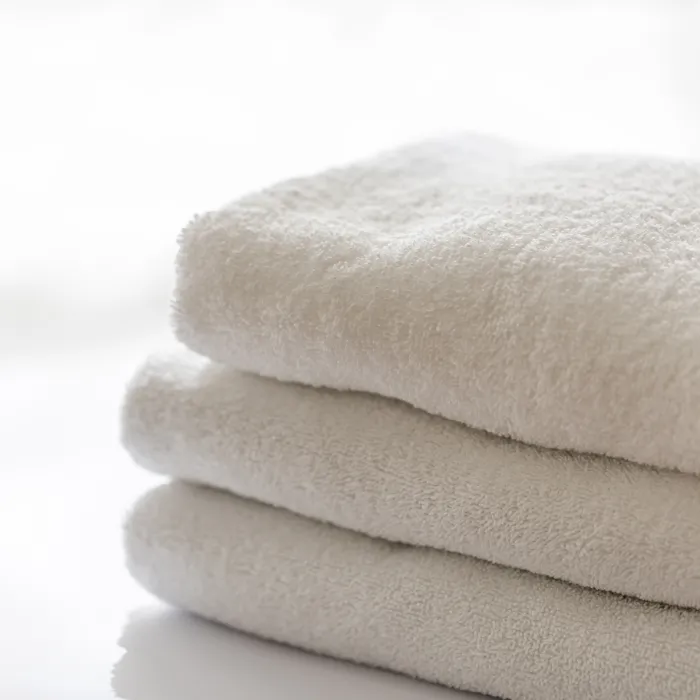
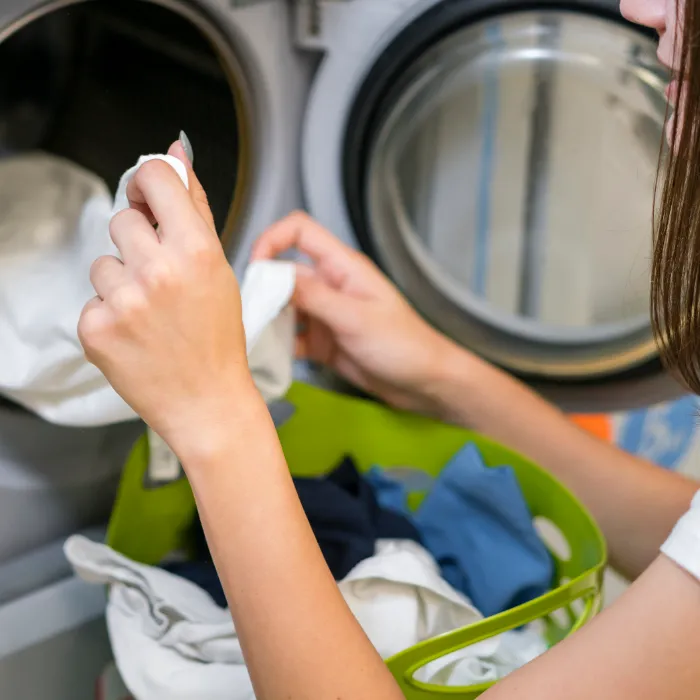
Here is how the common softening options compare for towels. The short version: anything that coats fibers adds softness now and stiffness later.
| Option | How it works | Leaves a coating on towels? | Reusable? | Best use |
|---|---|---|---|---|
| Liquid fabric softener | Coats fibers with a slippery layer | Yes, builds up over time | No | Skip on towels |
| Dryer sheets | Melt a softening coat onto fabric in the dryer | Yes | No | Skip on towels |
| White vinegar rinse | Mild acid loosens mineral and soap film | No | No | Monthly strip wash |
| Wool or plastic dryer balls | Separate towels so air moves through them | No | Yes | Every dryer load |
| BioWashBall | Reusable ceramic washing ball; helps cut detergent; doubles as a dryer ball | No | Yes, about 1,000 washes | Everyday wash and dry |
For towels, the winning combination is a vinegar strip wash once, then a reusable ball and a light hand with detergent every week.
How should you dry towels so they stay soft?
Drying is the step most people rush. Heat is not the enemy, but too much of it is. Follow these simple rules:
- Shake each towel out hard before it goes in the dryer. This lifts the loops.
- Use medium heat, or your dryer's moisture sensor setting.
- Take towels out as soon as they are dry. Over-drying makes cotton rough.
- Add two or three balls so towels tumble apart instead of rolling into one damp bundle.
- If you line-dry, give towels a 5-minute tumble on low afterward to soften the loops.
Guest-ready towel checklist
Start this three or four days before guests arrive. That leaves time for a second strip wash if you need one.
- Pull out every guest towel, hand towel and washcloth.
- Wash towels alone: vinegar strip wash, then a plain rinse.
- Dry on medium heat with two or three balls. Stop when just dry.
- Fold or roll while still slightly warm so the loops stay lifted.
- Store in a dry, ventilated closet, not a damp bathroom cabinet.
- Set out one bath towel, one hand towel and one washcloth per guest.
- Switch everyday laundry to less detergent and no softener from now on.
The bottom line. If you want to know how to make towels soft again, think "strip and simplify." One vinegar strip wash removes the coating. Less detergent, no softener and gentler drying keep towels fluffy. A reusable ball such as the BioWashBall makes those habits easy to keep, wash after wash.
FAQ: soft towel questions answered
Can you make old towels soft again?
Yes, in most cases. Old towels usually feel rough because of buildup, not worn-out cotton. A detergent-free vinegar wash followed by a plain rinse removes most of it. Towels with thin, broken loops may not fully recover.
Does vinegar make towels soft?
Vinegar does not soften cotton directly. It loosens detergent, softener and mineral film so the cotton loops can lift again. Use about 1 cup in a warm wash with no detergent, and never mix it with bleach.
Should I use fabric softener on towels?
It is better to skip it. Softener coats cotton fibers, and a 2021 lab study found that softener-treated cotton towels absorb water significantly less. Over time the coating also makes towels stiff.
Why are my towels stiff even when I use fabric softener?
The softener itself is often the cause. It builds up layer by layer, especially with too much detergent or hard water. Strip the towels with a vinegar wash and stop using softener on them.
Can laundry balls replace fabric softener on towels?
For towels, yes. Reusable balls help towels tumble apart in the dryer, which keeps the loops lifted without adding a coating. A washing ball like the BioWashBall can also help you use less detergent in the wash.
How often should I strip wash towels?
Every one to two months works for most homes. Hard-water homes may need it monthly. If you cut detergent and skip softener, you will need strip washes less often.
Do dryer balls make towels softer?
They help. Dryer balls separate towels so warm air moves through the loops, which keeps them fluffy and can shorten drying time. They work best when the towels are already free of buildup.
A reusable ceramic washing ball that helps you cut detergent and doubles as a dryer ball. Rated for about 1,000 washes.
See BioWashBallSimple, low-waste laundry and cleaning guides from our Eco Home & Cleaning hub.
Browse Eco HomeRetailers and distributors can ask about BioWashBall wholesale pricing, colors and private label.
Request wholesale pricingThis guide offers general home laundry tips. Always follow the care label on your towels and your washer and dryer manuals. BioWashBall is a laundry aid. It is not a disinfectant, and heavily soiled loads still benefit from a small amount of detergent. Product figures such as pH range and wash count come from BioNatural product specifications.
References
- Igarashi T, Nakamura K. Improvement of the Water Absorbency of Softener-treated Fabric: Addition of a New Hydrophilic Surface. J Oleo Sci. 2021;70(4):509-519. doi:10.5650/jos.ess20297
- U.S. Geological Survey. Hardness of Water. Water Science School. usgs.gov
- U.S. Geological Survey. Do you have information about water hardness in the United States? usgs.gov
- U.S. Environmental Protection Agency. Consumer Confidence Reports. epa.gov
- Wayfair. How to Host Thanksgiving: Make Hosting Thanksgiving Simple With These Tips. wayfair.com
- Apartment Therapy. The Thanksgiving Host's Complete Cleaning Checklist. apartmenttherapy.com
- BioNatural Co., Ltd. BioWashBall (Washball Plus) product specifications. 1thewater.com/products/biowashball/
- Photos: fabrikasimf, pvproductions and Magnific on Magnific, free license. Photo 1 · Photo 2 · Photo 3