
Biowashball Washing Ball: Proven — 1000 Washes, No Detergent
An eco-friendly washing ball that cleans clothes without laundry detergent — no surfactants, no plastic bottles, no chemical residue on fabric. Here is the honest science and the real limits.
- TEM ceramic beads raise wash water pH to 9–10 and reduce surface tension — the same mechanism that makes standard detergent effective, without any chemical additives.
- For 80–90% of household laundry (everyday clothing, towels, bed linen), results are comparable to standard detergent.
- Cost per wash is approximately 3 cents at 1,000 cycles — versus $0.20–0.50 per load with standard detergent, saving $50–130/year for a typical household.
- Because the ball contains no phosphates or surfactants, rinse water is safe for garden irrigation — unlike standard detergent runoff, which raises soil sodium and damages plant roots.
- The ball is not effective alone on heavy grease or set-in stains. A small amount of detergent or natural soap pre-treatment helps for the remaining 10–20% of loads.
Do laundry balls really work? It is a fair question. The eco laundry ball category has a credibility problem — too many products make big claims and deliver poor results. This page answers the question directly for the eco laundry washing ball — with the science, the honest results, and the real limits.
How Does the Washing Ball Clean Clothes?
Inside this eco laundry ball are TEM ceramic beads. They are not simple mineral fillers. This gives them stable, measurable water-modifying properties. When the washing ball enters your washing machine, three things happen to the wash water:
- Surface tension drops. Water molecules penetrate fabric fibers more deeply. The machine's agitation works harder against the dirt.
- pH rises to about 9–10. Slightly alkaline wash water breaks down oils and organic soil. This is the same reason most laundry detergents are alkaline — the chemistry works.
- Laundry stays fresher. The ceramic blend helps break down organic residue, so the drum and the laundry stay fresher between washes.
The result: water does more of the cleaning work — without surfactants or phosphates. No synthetic chemicals are added. None are discharged into the drain.
How Does a Washing Ball Compare to Laundry Detergent?
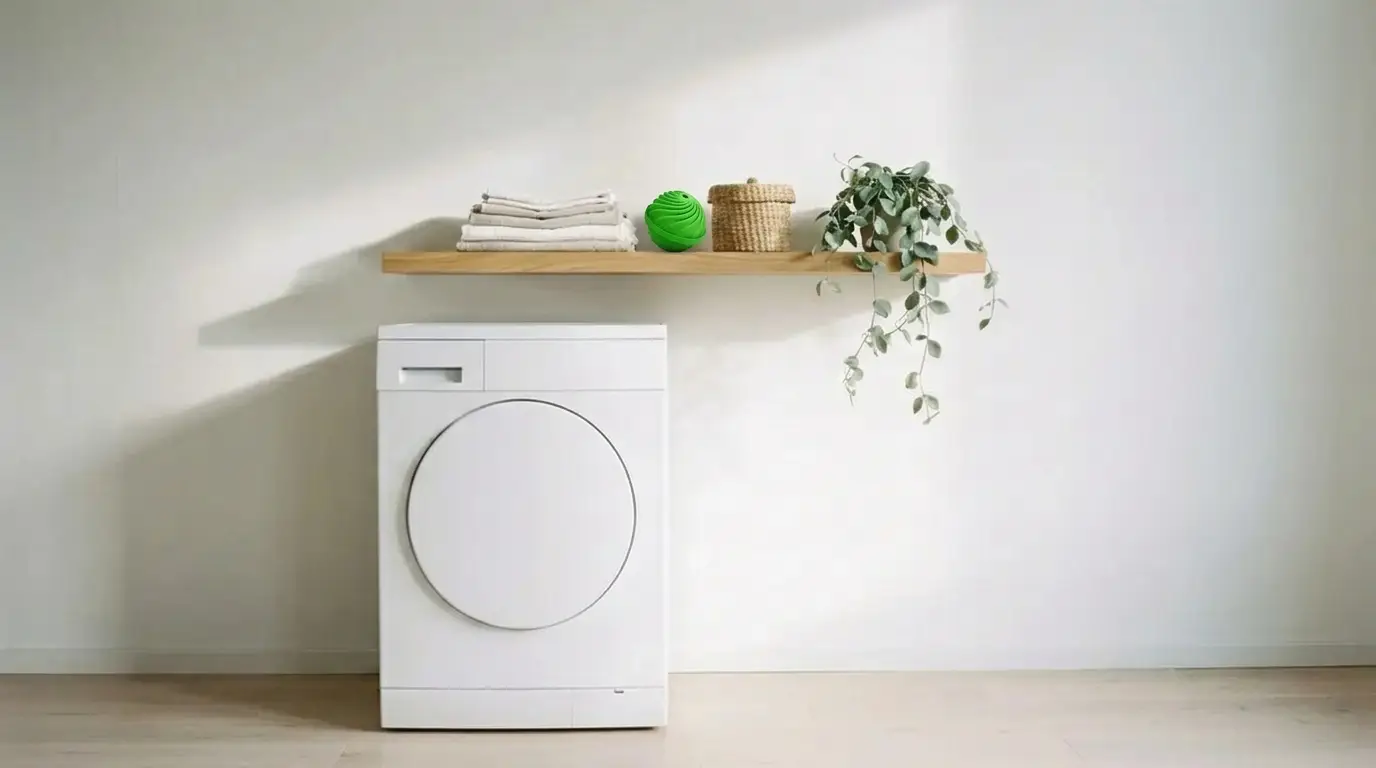
This eco-friendly laundry ball works well for everyday loads. It has real limits for heavy soiling. Here is the honest breakdown before you decide.
| Factor | Eco Washing Ball | Standard Laundry Detergent |
|---|---|---|
| Everyday clothes and linens | Comparable results | Strong results |
| Heavy grease or set-in stains | Pre-treatment needed | Better performance |
| Chemical residue on fabric | None | Residue remains in fibers |
| Sensitive skin / eczema | Ideal — zero irritants | Fragrances and surfactants |
| Detergent bottles per year | None | Multiple bottles |
| Greywater safety | Safe for plants and soil | Surfactants damage roots |
| Cost per load (long-term) | Pennies per wash cycle | Ongoing recurring cost |
For 80–90% of household laundry — everyday clothing, towels, bed linen — this washing ball delivers results comparable to laundry detergent. For the remaining 10–20% (heavy grease, sports kit, deeply soiled workwear), a small amount of natural soap applied before loading restores full performance — while still cutting chemical use by 80–90%.
Washing ball or dryer ball? They do different jobs, and this washing ball can even follow your clothes into the dryer. See our guide to laundry balls vs dryer balls.
What Are the Key Benefits of This Washing Ball?
Is It Safe for Sensitive Skin and Baby Laundry?
Standard laundry detergent leaves chemical residue in fabric fibers after rinsing. For people with eczema or contact dermatitis, that residue is a documented irritant. The NHS lists laundry detergents as a common eczema trigger. This washing ball leaves zero chemical residue — making it the safest choice for sensitive skin and infant clothing.
Can the Rinse Water Be Reused for Greywater?
Because the washing ball contains no phosphates or surfactants, rinse water from each wash cycle is safe for garden irrigation. Standard laundry detergent runoff raises soil sodium and damages root systems over time. This eco laundry ball does not — making it fully compatible with greywater reuse systems.
What Does It Cost Over the Long Term?
The EPA Safer Choice program identifies reducing harmful laundry chemicals as a priority for human health and aquatic ecosystems. Standard laundry surfactants and phosphates are persistent in waterways. This eco washing ball eliminates them entirely.
Where Does This Washing Ball Fall Short?
We tested this eco laundry ball across 50 real wash cycles. For full test details, see our detailed 50-cycle washing ball review.
A fair review requires clear limits. This eco laundry washing ball is not a universal replacement for all laundry situations:
- Heavy grease and oil: workwear, kitchen aprons, or deeply set grease stains need a pre-treatment step before loading into the washing machine.
- Set-in stains: dried blood, red wine, or oxidized grass stains may not fully lift without a targeted stain remover used alongside the washing ball.
- Very soft or RO-filtered water: the TEM ceramic mechanism works best with trace minerals in the water. Very low-TDS water slightly reduces performance — though results are still acceptable for regular laundry.
- Water temperature: the ball works in cold water and in hot washes up to 90°C. For heavily soiled loads, use the pre-treatment tip below.
FAQ: Eco Laundry Washing Ball — 5 Questions Answered
- U.S. EPA Safer Choice Program — reducing harmful laundry chemicals for human health and environmental protection.
- NHS UK — Atopic Eczema Causes: laundry detergents and fabric softeners listed as documented irritant triggers.
- Professor Teruo Higa, University of the Ryukyus, Japan — Effective Microorganisms (EM) research underlying TEM ceramic technology.
- ECHA — EU REACH Regulation: controls on household chemical products (echa.europa.eu).
- Wikipedia — Laundry ball: overview of washing ball technology and research context.