
Eco Laundry Ball That Works: Biowashball's Remarkable Path to a Truly Non-Toxic Home
An eco laundry ball that cleans everyday loads with little or no detergent. No detergent jugs, no added fragrance, and no surfactant residue left on your family's clothes. That is the promise of Biowashball, and the science behind it is more interesting than most people expect.
Every wash with conventional detergent sends surfactants, and often phosphates, optical brighteners and fragrances, down the drain. Every empty plastic jug has to go somewhere.
Biowashball was designed to break that cycle. Not with a compromise, but with a real alternative built on TEM (Total Effective Microorganism) ceramic technology and a simple idea: clean clothes and a clean planet are not competing goals.
What is the hidden cost of conventional detergent?
Walk down any laundry aisle and the scale of it is easy to see. Row after row of single-use plastic jugs, each holding a mix of synthetic surfactants, optical brighteners, fragrances and preservatives.
The U.S. EPA's Safer Choice Program exists because some common cleaning ingredients can harm aquatic life. Phosphates feed algae blooms. Optical brighteners, which make white fabric look whiter under UV light, are made to stay on fabric and end up in wastewater too.
For your family, the hidden cost is direct contact. Some detergent residue stays in fabric after rinsing. It sits against your skin in every shirt and every set of sheets.
For your budget, the cost simply never ends. Every few weeks, you buy more.
The eco laundry ball exists to break all three of those cycles at once.
What is an eco laundry ball, and how does it clean?
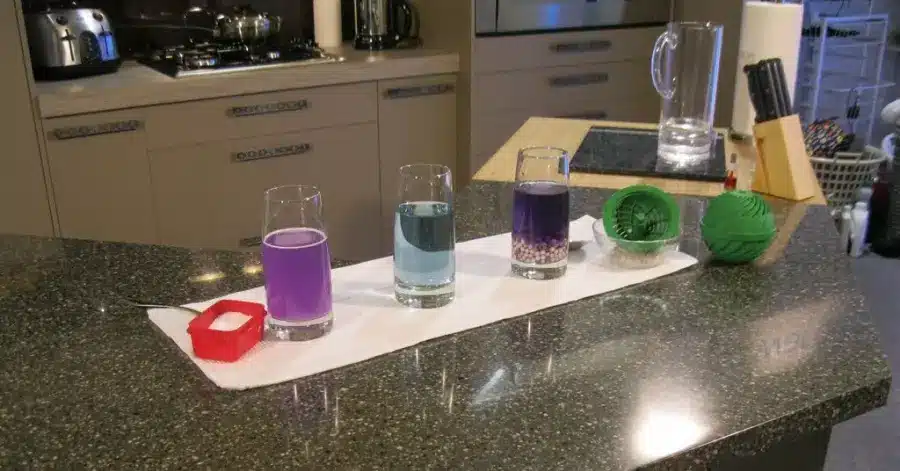
An eco laundry ball is a reusable cleaning aid that goes straight into the washing machine drum with your laundry. Instead of surfactants, it changes the wash water itself, shifting its pH and cleaning character with mineral ceramics.
The result is wash water that lifts everyday dirt and body oils from fabric better than plain water, without adding the surfactant residue that detergents leave on clothes and send into waterways.
How do EM ceramics change the wash water?
The idea starts with EM ceramic, a fired clay made with Effective Microorganisms (EM). EM was first developed by Professor Teruo Higa at the University of the Ryukyus, Japan.
In the wash, the ceramic beads shift water toward a mildly alkaline pH. That is the range where oils and organic soil loosen from fabric, and it is the same reason most laundry detergents are alkaline.
What makes TEM ceramic technology different?
Biowashball takes EM ceramic technology a step further with TEM (Total Effective Microorganism) ceramic. The cultures are our own, grown from native Korean microbes.
How are TEM ceramics made?
- Ferment. Clay from plant sediment layers is mixed with cultured Korean microbes and fermented for at least six months.
- Form. The fermented clay is shaped into small beads.
- Fire. The beads are kiln-fired at 800 to 1,400 °C. Firing removes the microbes themselves and leaves a stable mineral ceramic that keeps working wash after wash.
What do TEM ceramics do inside your washing machine?
- Alkaline shift. The ceramic shifts ordinary pH 7 tap water toward pH 9 to 10, the range where detergents work, without the harshness of strong alkaline cleaners.
- Gentle friction. The ball tumbles with the load and helps loosen soil from fabric.
- Fresher laundry. The ceramic blend helps break down organic residue, so the drum and the laundry stay fresher between washes.
- Less limescale. EM ceramic makers such as Agriton report less limescale build-up in machines that use EM ceramics.
Together, these effects give cleaning results that, for everyday laundry, hold up well against a standard detergent wash.
Does an eco laundry ball really clean as well as detergent?
It is the first question everyone asks.
For everyday laundry, meaning lightly to moderately soiled clothing, bedding and towels, the answer is yes. The ceramic creates wash water that cleans cotton, linen, polyester and mixed fabrics well in a normal cycle.
For heavy soil, deep stains, workwear or sports kit, add a small amount of detergent or a natural stain remover along with the ball. You still use far less than usual. BioWashBall is a cleaning aid. It is not a disinfectant and does not sanitize fabric.
What wash temperature should you use?
BioWashBall works in cold water and in hot washes up to 90 °C. You do not need hot water for everyday loads. Multikraft, another EM ceramic maker, notes that 30 to 40 °C is enough for normal everyday clothing with EM ceramics.
That matters for your energy bill. ENERGY STAR says water heating uses about 90% of the energy it takes to run a clothes washer. It also says cold water generally does a good job unless you are dealing with oily stains.
The ball is rated for 1,000 washes, about three years at one load a day.
Is it gentle on babies and sensitive skin?
For many families, the biggest benefit is what the ball does not leave behind.
Conventional detergents, even many labeled "sensitive" or "gentle," can leave traces of surfactant and fragrance in fabric after rinsing. That fabric stays against the skin all day and all night. For adults with eczema or contact dermatitis, fragranced products can be a trigger. Babies' skin is more delicate still.
Biowashball adds no surfactants, no optical brighteners, no fragrance and no preservatives to the wash. What touches your baby's skin after washing is clean fabric rinsed in water.
That makes Biowashball a natural fit for:
- Newborn clothing, blankets and bedding
- Family members with eczema or chemical sensitivities
- Anyone building a simpler, low-residue laundry routine
- Pet owners who wash animal bedding with the family laundry
The NHS lists soap and washing detergent among the irritants that can make atopic eczema worse. If you have a skin condition, talk to your doctor or dermatologist about laundry products.
How does the eco laundry ball fit a minimalist, non-toxic life?
A growing community of people, from minimalists to zero-waste households, is rethinking how many products their home really needs.
The typical American laundry setup includes detergent, fabric softener, dryer sheets, stain spray, color-safe bleach and sometimes a separate delicates wash. Each is another product, another plastic container and another set of chemicals in the home and the water system.
Biowashball replaces the core of that system with a single, reusable, chemical-free device that fits in the palm of your hand.
It can even follow your clothes into the dryer and tumble like a dryer ball. See how the wash and dry steps fit together in laundry balls vs dryer balls.
What does "coexistence" mean for Biowashball?
The Biowashball philosophy rests on one word: coexistence. Comfort, cleanliness and care for the environment do not have to be in conflict. A non-toxic home does not mean giving up effective cleaning. Living well and living responsibly can be the same thing.
That matches the goal the EPA describes for greener cleaning products: products that work well while reducing chemical burden, water pollution and packaging waste across their life cycle.
The eco laundry ball is not a compromise version of clean. It is a different, and in many ways better, version of clean.
How much can an eco laundry ball save over time?
Switching is a values decision. It is also a simple money decision.
| Cost factor | Liquid detergent | Biowashball |
|---|---|---|
| How you pay | Every bottle, for as long as you do laundry | One purchase for about 1,000 washes |
| Detergent per everyday load | A full dose every time | None, or a small amount for heavy soil |
| Wash water temperature | Often warm or hot | Cold works for everyday loads |
| Packaging | A new jug or pod box each time | None between purchases |
To estimate your own savings, multiply what you pay for detergent per load by the loads you run in a year. That amount repeats every year with detergent. With Biowashball, most of it simply stops.
Beyond detergent itself, there are other savings:
- Lower energy use. Washing cold instead of hot cuts the biggest energy cost of a wash, which is heating the water.
- Kinder to the machine. EM ceramic makers report less limescale in machines that use EM ceramics.
- Less packaging. No recurring plastic jugs, pod tubs or single-use sachets.
Why is Biowashball built for everyday life?
Biowashball brings TEM ceramic technology and EM-based science together in a ball designed for daily use in any standard washing machine. We began producing it in 2001, and over 1 million boxes have sold since launch.
What are the key specifications?
| Specification | Washball Plus |
|---|---|
| Technology | TEM (Total Effective Microorganism) ceramic, fermented at least six months and fired at 800 to 1,400 °C |
| Weight | 230 g total, with 152 g of TEM ceramic in an elastomer housing |
| Wash water | Shifts tap water toward pH 9 to 10 |
| Temperature | Cold washes and hot washes up to 90 °C |
| Lifespan | 1,000 washes, about three years at one load a day |
| Machines | Front-load and top-load washers, plus hand washing and pre-soaking |
| Dryer | Can tumble in the dryer with the load |
| Added to the wash | No surfactants, fragrance, preservatives or optical brighteners |
| Fabrics | Everyday cotton, linen and polyester loads. Follow care labels for wool and delicates |
How do you use Biowashball?
- Place Biowashball in the washing machine drum with your laundry.
- Run your normal wash cycle. No detergent is needed for everyday loads.
- For heavily soiled items, add a small amount of detergent or natural stain remover.
- Move the ball into the dryer with your clothes if you like, or let it air-dry.
- Once a month, leave the ball in direct sunlight for a few hours to keep it in good condition.
That is the whole routine. One ball. No measuring. No plastic cap. No perfume smell.
Stock BioWashBall or ask about private label programs.
Request wholesale pricingLooking for the same clean, natural approach for your drinking water? Explore our H2CAP Plus hydrogen water bottle and ALPHA 1700 alkaline water ionizer. More eco living guides are in Eco Home & Cleaning.
References
- U.S. EPA. Safer Choice: Frequently Asked Questions. epa.gov
- U.S. EPA. Identifying Greener Cleaning Products. epa.gov
- EMRO Japan. Dr. Teruo Higa, Effective Microorganisms. emrojapan.com
- Agriton. EM Ceramics. agriton.co.uk
- Multikraft. Multi-knowledge: Ceramics. multikraft.com
- ENERGY STAR. Clothes Washers. energystar.gov
- NHS. Atopic eczema. nhs.uk
- BioNatural Co., Ltd. BioWashBall product specifications. 1thewater.com/products/biowashball/